
The scaling up of the India-US strategic partnership to the level of non-NATO ally with defence deals, sharing and transfer of defence technology, interoperability, joint collaboration and joint production of defence equipment has exacerbated Moscow's anxiety, notes Rup Narayan Das.

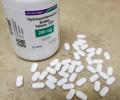
Indian Council of Medical Research had also recommended the use of hydroxychloroquine for treating healthcare workers handling suspected or confirmed coronavirus cases and also the asymptomatic household contacts of the lab-confirmed cases.
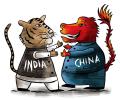
Indian auto and pharma industries import several critical components and raw materials from China.

Ahead of this election, the alliance between the BJP and the SKM had broken down. One reason is the fear that like Article 370, Article 371F might also be changed.
The US-based drug maker Eli Lilly and Company will form strategic drug manufacturing and development alliances with major Indian pharmaceutical companies to tap the opportunities in contract research and manufacturing.
India lost its competitive advantage as China gave fiscal benefits to its local manufacturers. Besides, recent policy flip-flops have, however, dented India's image as the 'pharmacy of the world'.
The government is targeting 1,200 technical collaborations between Japanese companies and Indian investors for over Rs 42,000 crore, 200 joint ventures with overseas investors for Rs 14,000 crore, and another Rs 14,000-crore investment from about 50 multinational companies.
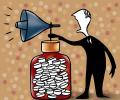
Indian drug firms get a shot in the arm in the $12 bn Australian drug market as the Therapeutic Goods Administration (TGA), Australia agrees to accelerate the drug approval process in that country for Indian players who already have an approved plant and product from one of the stringent regulatory authorities like US, EU or Canada. From current sales of $340 mn, the Indian firms can see a significant upside in sales; felt Dinesh Dua, former chairman of the Pharmaceutical Exports Promotion Council of India (Pharmexcil), and the MD of Nectar Lifesciences. He highlighted that only 12 percent of the Australian drug market is generic, as against 80-90 per cent in the US or EU. Of this $1.5 bn generic drug market in India, Indian companies have a small share.

The Indian Pharmaceutical Alliance has approached regulator for a dialogue to understand the concern raised by it

India will export anti-malarial drug hydroxychloroquine, high in demand globally, only to foreign governments and not to private companies, as the product is under prohibited or banned category of exports, sources said. Although exports of this medicine is completely banned, India has decided to export this anti-malarial drug in sync with its global commitment to deal with the coronavirus pandemic.

Pharma companies gear up for the 'new normal' as they train and align their sales forces for a paradigm shift. GSK leads the charge with staggered return-to-work, others plans yoga sessions and health care webinars for salesperson's family.
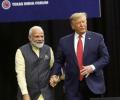
'I want to thank Prime Minister Modi of India for allowing us to have what we requested for the problem arose and he was terrific. We will remember it'

If the concerns over risking political capital are overcome, the long-term gains for the Indian economy will be immense, asserts A K Bhattacharya.

India must be prepared to deal with climate disasters, geopolitical confrontations, and social strife linked to global events, asserts Jayant Sinha, chairman of Parliament's Standing Committee on Finance.

The API of Paracetamol, a fever and pain medication, has grown 25 per cent from Rs 450-480 per kg in December 2020 to Rs 580-600 per kg in April. When compared to the pre-Covid prices of December 2019, the surge is much steeper -- around 140 per cent, reports Sohini Das.
Exports of 13 APIs - including paracetamol, tinidazole, metronidazole, vitamin B1, vitamin B6, vitamin B12, acyclovir, progesterone - along with formulations made from these APIs, would be restricted.

'The Centre is planning to procure five million vials of Remdesivir ahead of the third wave. What's better is that this time, the government is paying us in advance,' said a senior executive of a Mumbai-based pharma player which makes Remdesivir. Sohini Das reports.

India had been engaged in a contentious battle with the US over the issue, especially in the pharmaceutical sector.
.jpg)
The Drug (Prices Control) Order implemented in May last year brought into its purview 652 packs of 348 formulations.

A notice issued by the Indian Health Ministry at the weekend said that a government-appointed committee of experts had found that the banned combinations were "likely to involve risk to human beings, whereas safer alternatives to the said drug are available."
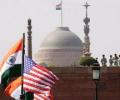
Multinational organizations including PepsiCo and industry associations like IPA, have come in favour of India's intellectual property regime, which is being reviewed by the US administration.

Industry fears tougher US stance on IP after President Donald Trump asserted that foreign countries must pay a fair share for drug development costs. Aneesh Phadnis reports.
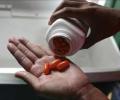
Various domestic companies such as Ranbaxy, Wockhardt and Agila Specialities recently came under the US FDA scanner for lapse in manufacturing practices.

Dispute over IPR was a bone of contention in bilateral ties till a couple of months ago.
This is to take head on big American pharmaceutical giants, which in the recent past had launched a strong anti-India campaign against efforts of such companies to provide affordable health care not only to people in India, but also in the third world countries.
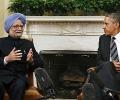
A federal body began a hearing on the impact of Indian trade policies on US businesses wherein American bodies and advocacy groups slammed India for its trade practices, alleging they hit their jobs and business.

Exports declined for the fourth-consecutive month by 10.3 per cent year-on-year to $34.98 billion in May, while the trade deficit widened to a five-month high of $22.12 billion. According to the data released by the commerce ministry on Thursday, key export sectors recording negative growth include petroleum products, gems and jewellery, engineering goods, ready-made garments of all textiles and chemicals. Imports also declined 6.6 per cent, six-month in a row, to $57.1 billion against $61.13 billion in the same month last year, the data showed.

Since 2013, the FDA has banned around 30 Indian drug manufacturing units for various violations
Industry is gathering scientific data to approach the regulator, DCGI, for a review of the suspension order.
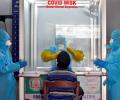
Cadila, Biocon developing rapid antibody testing kits; Eris, Mylan, Gland importing. There are two kinds of testing for the novel coronavirus - the real-time polymerase chain reaction test kit that uses throat or nasal swabs and provides results in a few hours, and the other is antibody-based rapid testing kit that use blood samples and provides results in a few minutes.
In a letter to health minister Harsh Vardhan, the Indian Pharmaceutical Alliance, an industry body representing leading pharma companies, including Sun Pharma, Lupin, Dr Reddy's Labs, Cadila Health and Glenmark, stressed the need for an out-of-court settlement with health activists fighting for the rights of clinical trial participants.
'Gift-giving' - from free dinners and drug samples to promotional merchandise - seems to be driving drugmakers' marketing - a marketing prescription deeply entrenched in the industry. This is a well-oiled racket that sees pharmaceutical (pharma) companies 'gifting' doctors to push their respective drugs under the guise of marketing. But is there a cure in sight to end this unhealthy alliance? The recent controversy following the income-tax raids on Bengaluru-based drugmaker Micro Labs, makers of popular paracetamol brand Dolo-650, has brought this to the fore, again.

Maharashtra is the BRS' first target.

In his press conference on Wednesday, Trump targeted drug-makers and vowed to bring back production in the US.

Prime Minister Narendra Modi said on Wednesday that international travel should be made easier through mutual recognition of vaccine certificates, amid several countries adopting different sets of rules to allow foreigners to enter their territory in the wake of the COVID-19 pandemic.
 © 2026 Rediff.com - Advertise with us - Disclaimer - Privacy Policy - Sitemap - Feedback - About us - Terms of use - Grievances